
In Scotland, at least, ‘tis the season of all things wool – woolly sweaters, hats and gloves, to keep the chill at bay, and this carol, “The Shepheards song: a caroll or hymne for Christmas” (author Edmund Bolton, earlier published in compilation of verses “England’s Helicon”, 1600), happily celebrates the moment sheep and shepherd heard heavenly music:
“Sweet musicke, sweeter farre, than any song is sweet:
Sweet Musicke heauenly rare,
Mine eares, O peeres, doth greet.
Yon gentle flocks, whose fleeces, pearl’d with dewe,
resemble heaven, whom golden drops made bright:
Listen, O listen, now, O not to you,
Our pipes make sport to shorten wearie night.
But voices most divine,
Make blissful harmony;
Voices that seem to shine
For what else clears the sky
Tunes can we hear, but not the singers see
The tunes divine, and so the singers be”
(taken from “Christmas carols, ancient and modern”, William Sandys, p. 35; see also Bullen, “England’s Helicon” (1899), p. 165)
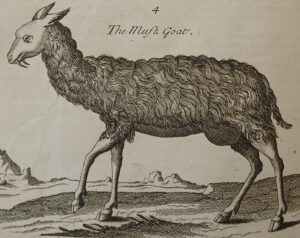


In honour of this “Shepheard’s song” we’ve herded up an ovine selection from our fabulous collection. This includes this stoic shepherdess from Scottish social photographer Franki Raffles, and two images in competition for “least likely place to find a farmyard” – goats from “A complete history of drugs” (Monsieur Pomet, 1748) or this shepherd from the working books of reluctant school-boy mathematician (but Quentin Blake-esque illustrator) Walter Hubbard (1868 – 1869).
Discover more from University Collections blog
Subscribe to get the latest posts sent to your email.